Pantry
No fish sauce in the house? Here is what actually stands in for it.
Fish sauce (nam pla) gives Thai food its salt and most of its savory depth. Nothing copies it exactly, but some swaps get close, and a few dishes just do not work without the real thing.
What fish sauce is doing in the dish
Nam pla is fermented anchovy liquid: salty, with a savory depth that plain salt does not have. It is the main salt source in almost every recipe on this site, and in curries and soups it is doing flavor work, not just seasoning work.
Any substitute is replacing two things at once: the salt and the depth. Light soy sauce covers the salt. Getting the depth back takes an extra step.
The swaps, closest first
Light soy sauce is the pantry’s usual answer for a vegetarian version, and it is the easiest swap to find. You lose some depth, so the dish tastes a little flatter.
Soy sauce with a little dried seaweed or dried shiitake mushroom simmered in gets some of that depth back. Add the mushroom or seaweed early so it has time to flavor the liquid, then strain it out or leave small pieces in, depending on the dish.
Store-bought vegan fish sauce, sold as such in most Asian grocers, is built to copy the salt-and-depth combination directly, so it is usually the closest match without extra steps.
For salads that use fish sauce mainly for salt and savor rather than long cooking, salt plus a bit more lime juice than usual can carry a dish, though it will not taste identical.
Whichever one you pick, start with the same amount the recipe lists, then taste and adjust the way the site’s flavor balance habit says: too flat means more of the swap, too sharp means a little sugar.
Per recipe: cooking the archive without fish sauce
- Pad kra pao: swap the fish sauce for a bit more soy sauce and oyster sauce. It loses some depth, but the holy basil and chilies still carry the dish.
- Green curry chicken: use soy sauce, and pick a curry paste without shrimp paste if you want it fully vegetarian.
- Tom yum goong: use soy sauce or a vegan fish sauce. The chili jam and shrimp already give the broth most of its character.
- Pad thai: a vegan fish sauce keeps the sour-sweet-salty balance closer than soy sauce alone. Taste and add a pinch of salt if it tastes thin.
- Som tum Thai: use soy sauce or a vegan fish sauce and add a little more lime. This is one of the dishes that leans hardest on fish sauce, so expect a flatter result.
- Larb moo: soy sauce works but turns the dressing one-note. A vegan fish sauce is the closer swap, since larb depends on a sharp, salty-sour dressing.
- Khao soi: soy sauce blends in fine here. The curry paste and coconut milk carry most of the flavor.
- Mango sticky rice: no fish sauce in this one. If this is the only recipe you came for, there is nothing to swap.
Questions
- What is a good vegan fish sauce substitute?
- Store-bought vegan fish sauce copies the salt and depth together, so it is usually the closest match. Soy sauce with a little dried mushroom or seaweed simmered in is a good homemade option.
- Can I make pad thai without fish sauce?
- Yes. A vegan fish sauce keeps the sour-sweet-salty balance closest; soy sauce alone works too but tastes a little flatter.
- Can I make pad kra pao without fish sauce?
- Yes, swap in a bit more soy sauce and oyster sauce. The holy basil and chilies still carry most of the dish.
- Does soy sauce taste the same as fish sauce?
- No. Soy sauce covers the salt but not the savory depth that fermented fish sauce has, so dishes taste a little flatter without an extra step like simmered mushroom or seaweed.
Keep reading
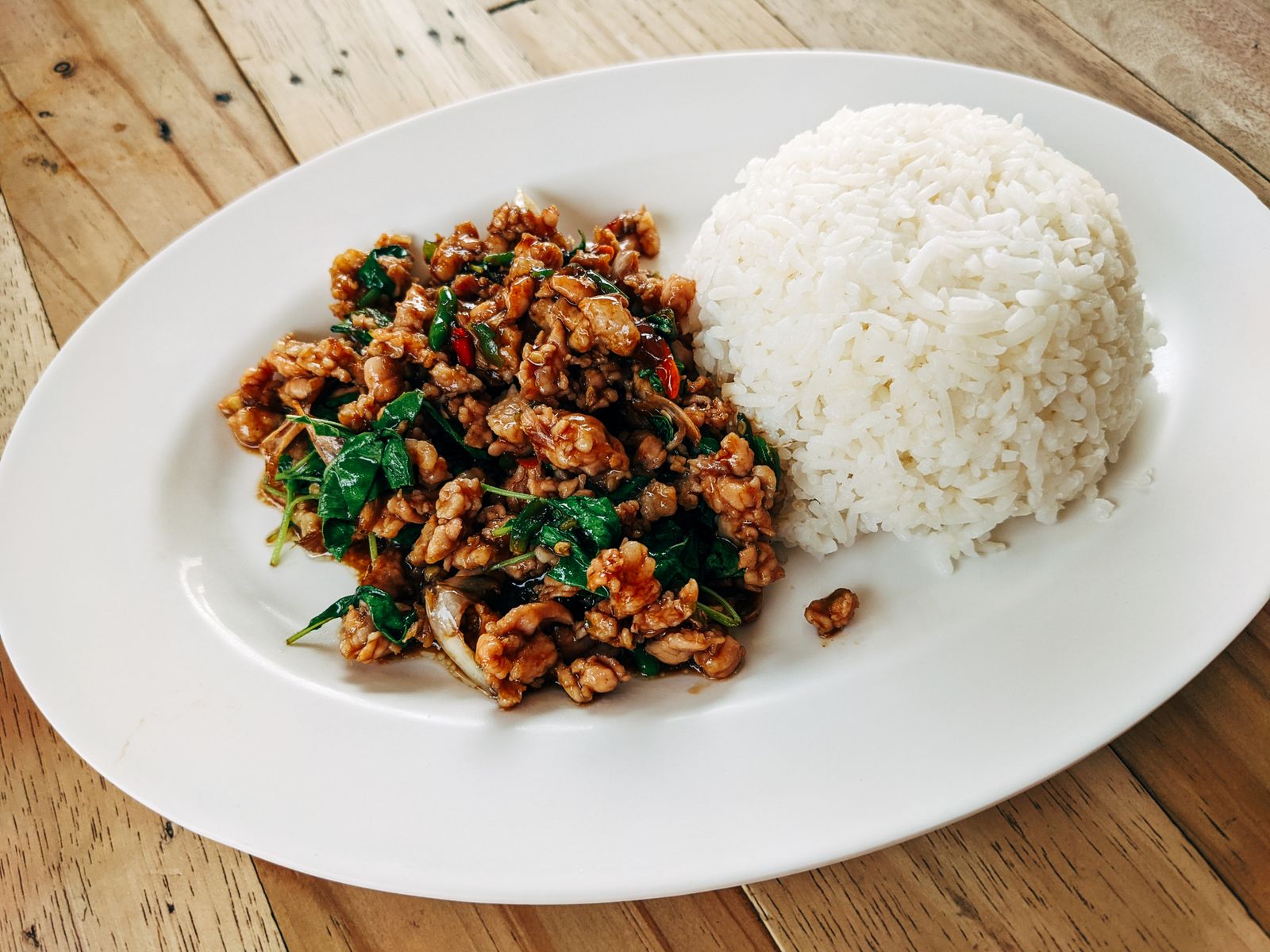
Pad Kra Pao ผัดกะเพรา
Holy basil pork stir-fry with a crispy fried egg. The most ordered lunch in Thailand, done in one wok.
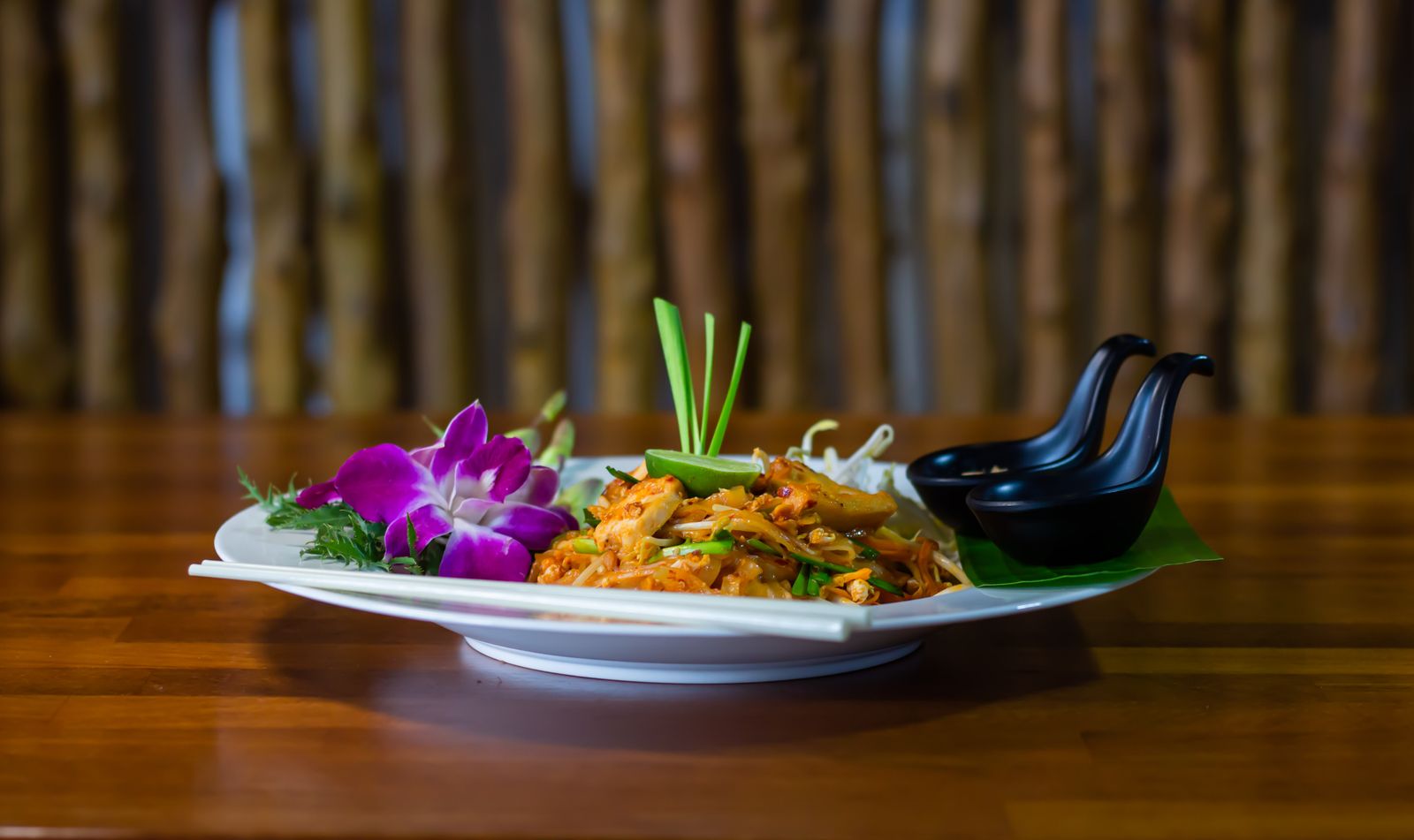
Pad Thai ผัดไทย
Tamarind, palm sugar and fish sauce in the right ratio, cooked two portions at a time.
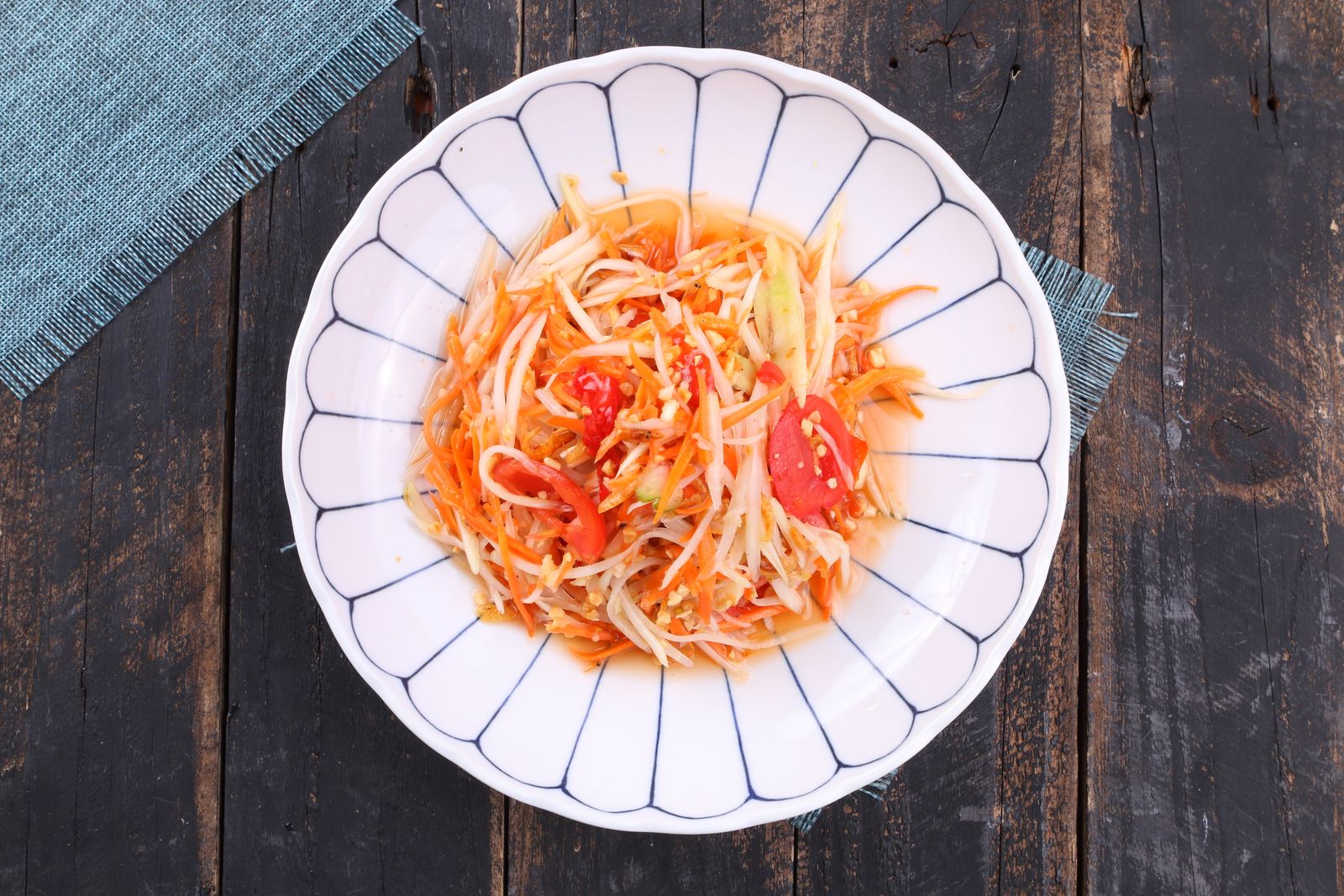
Som Tum Thai ส้มตำไทย
Green papaya salad pounded in a mortar with lime, palm sugar, peanuts and dried shrimp.
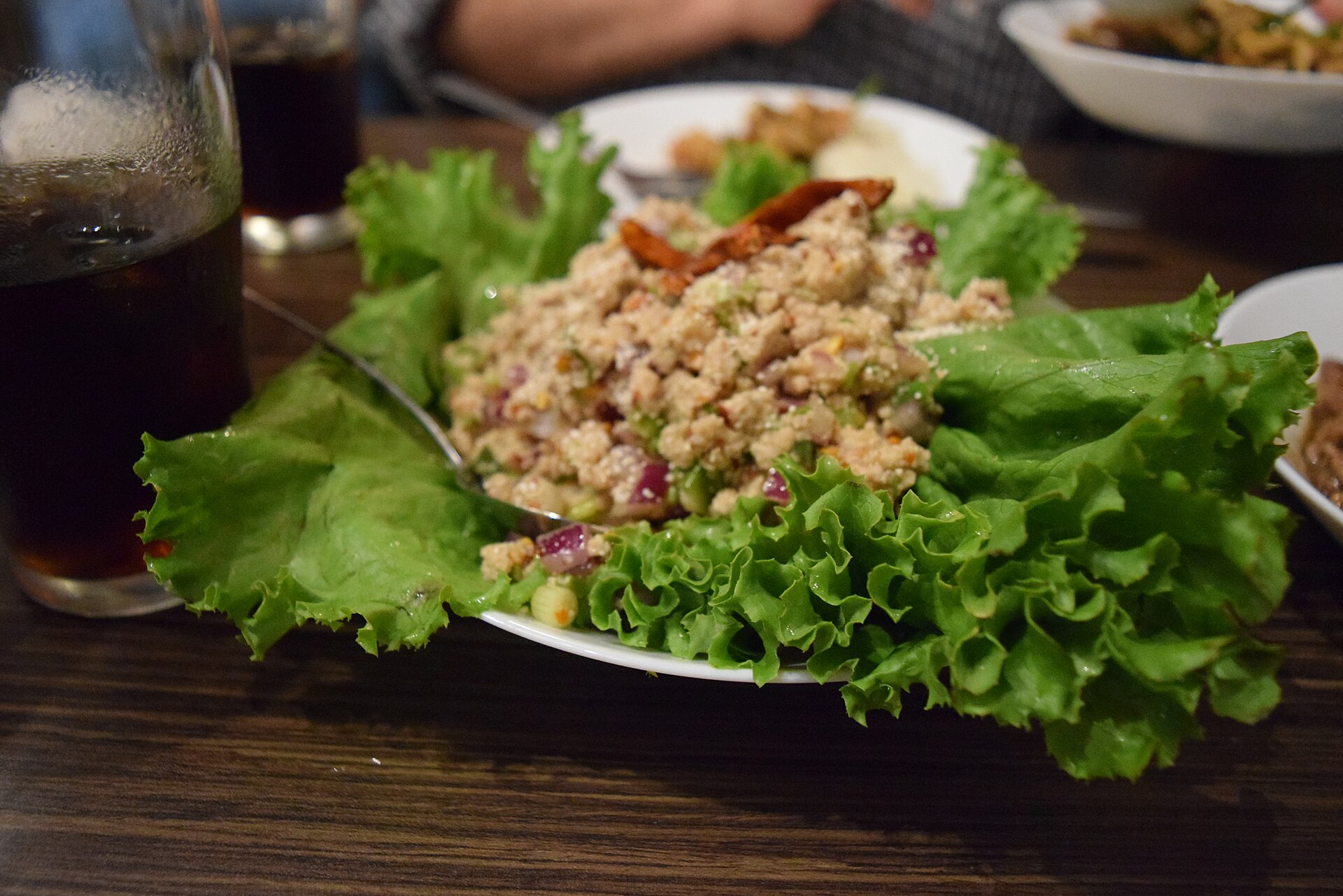
Larb Moo ลาบหมู
Isaan minced pork salad with toasted rice powder, lime, fish sauce and a lot of herbs.